
From Classrooms to Culture: Inside CFI’s Winter International STEAM Experience in Hangzhou
CFI Global Engagement Division
Jan 5, 2026
Six days. Two universities. Ancient villages, advanced robotics labs, and a New Year celebration thousands of miles from home.
This winter, CFI students traveled to Hangzhou, China for an immersive international STEAM experience hosted by Zhejiang Water Conservancy and Hydropower College (ZUWE) and partner institutions. The program blended engineering education, cultural exchange, and independent exploration into a single unforgettable week where learning happened everywhere, from research laboratories to mountain forests.
First Impressions and New Connections
The experience began with a warm welcome from ZUWE. After breakfast and introductions, students stepped onto campus for an opening ceremony and cultural exchange with university representatives. What could have been a formal greeting quickly turned interactive. A scavenger hunt broke the ice as students searched for small gifts and received program notebooks they would use throughout the week.
A tour of the campus history museum introduced students to the region’s deep connection to rivers and hydropower engineering, helping them understand why water systems play such a critical role in local industry and education. Conversations with university students soon followed, and by lunch the group had already moved beyond introductions into genuine discussion about student life.
One of the most memorable early moments came in the canteen, where students learned to fold dumplings with the campus chef. Precision folding techniques quickly gave way to a humorous “just squish it together” method, and the group produced so many dumplings they began sharing them with other students nearby.
By the end of the first day, martial arts practice, museum exploration, and a visit to the Wensli Silk Museum had already shown students that the week would not separate technology and culture. Instead, both would constantly reinforce each other.
Learning Engineering Where It Actually Happens
At ZUWE, students discovered how closely industry and education can be connected. The hydropower engineering program demonstrated how companies collaborate directly with the university, providing real machinery models and even live-updating schematics from operating facilities. When real systems change in the field, classroom materials change with them.
Students examined competition projects built by university teams and learned how selective the program is, admitting only a small number of applicants each year.
Hands-on technology quickly followed theory. Students controlled robotic dogs using sensor mapping and explored a virtual reality lab featuring underwater remotely operated vehicles used in water research and infrastructure maintenance. These sessions showed engineering not as abstract math problems but as practical systems solving real-world challenges.
The learning expanded at Zhejiang University of Technology’s Future Technologies Lab, where students explored robotics automation, CNC machining, laser cutting, and 3D printing. Watching digital models transform into physical objects helped connect classroom concepts to manufacturing careers.
Creativity, Movement, and Cultural Expression
Afternoons often shifted from engineering to artistic expression, reinforcing that innovation requires both technical and creative thinking.
Students practiced paper cutting, calligraphy, and painting before stepping into a modern dance workshop that quickly transformed hesitation into enthusiasm. Later, they painted fabric bags and blue fans using traditional techniques, curing designs with ultraviolet light in a blend of ancient art and modern tools.
A traditional tea ceremony slowed the pace of the week, encouraging students to experience patience and attention to detail as part of daily life rather than just formal ritual.
Exploration Beyond the Classroom
Outside the universities, Hangzhou itself became part of the curriculum.
Students explored two ancient villages, one centered on preserved food traditions filled with fermenting sauces and cured meats, and another combining historic architecture with lively markets, arcades, and cafés. Ordering meals independently pushed students to practice language skills and confidence in unfamiliar settings.
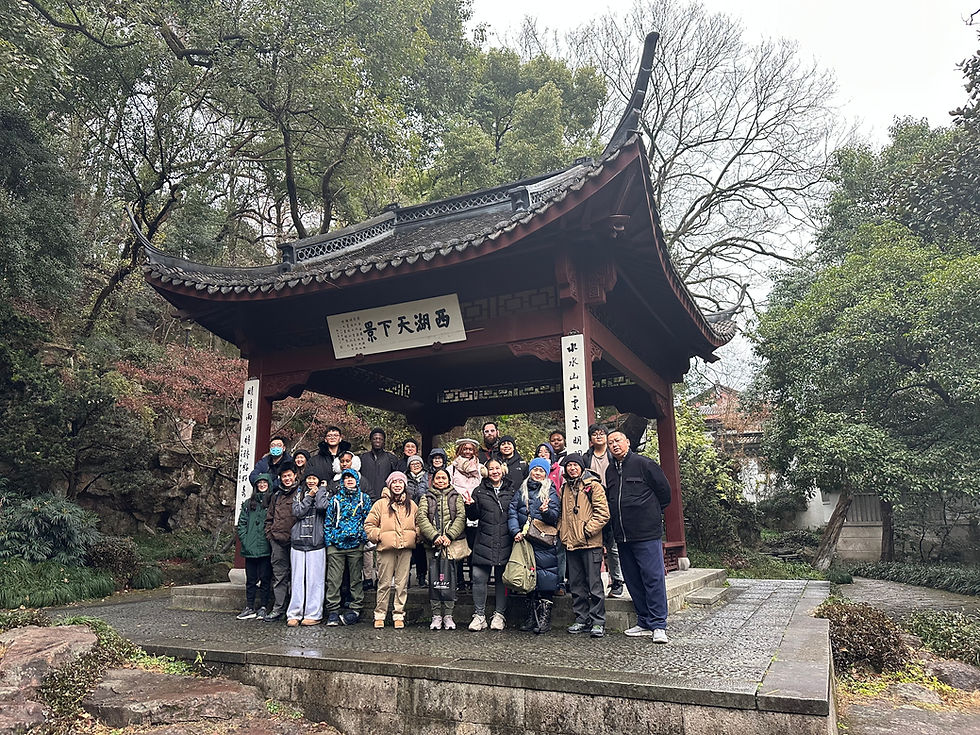
A visit to West Lake, a UNESCO World Heritage Site, placed everything into historical context. Standing beside a landmark celebrated for centuries by poets and emperors helped students understand how culture influences national identity.
Museum visits deepened this perspective. At the Hangzhou Museum and Zhejiang Museum, students encountered relics, historic engineering innovations, and theatrical constructions, linking ancient craftsmanship to modern engineering principles.
A Week of Moments Students Won’t Forget
Some memories were academic. Others were simply human.
Students cheered when familiar comfort foods appeared during a New Year banquet. They negotiated prices in a silk market and debated who achieved the best bargain. They explored night markets, arcades, and cat cafés in small groups. A teacher’s long explanation about redwood trees became its own running joke during a mountain forest hike.
The New Year’s Eve celebration brought everyone together for snacks, games, and laughter, marking a holiday far from home but surrounded by new friends.
Nature, Celebration, and a Meaningful Farewell
The final day moved from city to nature at Dongming Mountain Forest Park. Walking through bamboo forests and climbing mountain paths offered a quiet moment of reflection after a busy week of activity.
The closing ceremony returned the group to campus for performances, games, and shared talents from both visiting and host students. Music, poetry, and humor filled the evening as the program ended the same way it began, through connection.
A final late-night conversation over boba tea gave students time to talk about what they experienced and what they would take home with them beyond souvenirs.
A Lasting Impact
By the end of the week, students had done far more than visit another country. They had collaborated across language barriers, explored advanced technology, practiced independence, and experienced daily life within another culture.
The goal of the winter international program was never simply travel. It was perspective.
Students returned home with stronger confidence, global awareness, and a clearer understanding that learning does not belong only in classrooms. It lives in conversations, shared challenges, unfamiliar foods, and new environments.
Here’s to the next journey that expands both knowledge and horizons.